Temple of Literature—a name that immediately evokes the image of an ancient center of learning, one that seems to exist only in folklore and on the pages of history.
And it is not just another tourist spot to stop by.
For a structure built in 1070 AD, I imagined it would be a ruin, slowly worn down by the passage of time. Instead, I found one of Vietnam’s best-preserved treasures.
Originally built as a temple dedicated to the Chinese philosopher Confucius, it later evolved into an imperial academy that educated generations of scholars for nearly 700 years. Today, it is recognized as Vietnam’s first university, and the entire heritage complex is collectively known as Văn Miếu–Quốc Tử Giám.
Văn Miếu means “Temple of Literature,” while Quốc Tử Giám means “Imperial Academy.”
It was one of the first places I wanted to visit as soon as we arrived in Hanoi. We had four full days and for slow travelers like us, there were far too many sights to cover. I was willing to forgo even the iconic, almost obligatory excursion to Ha Long Bay in favor of immersing myself in the charming city of Hanoi—exploring its heritage landmarks, museums, art galleries, and gallivanting through the bustling Old Quarter, its crowded alleyways and quieter corners.
And the Temple of Literature was at the very top of my list.
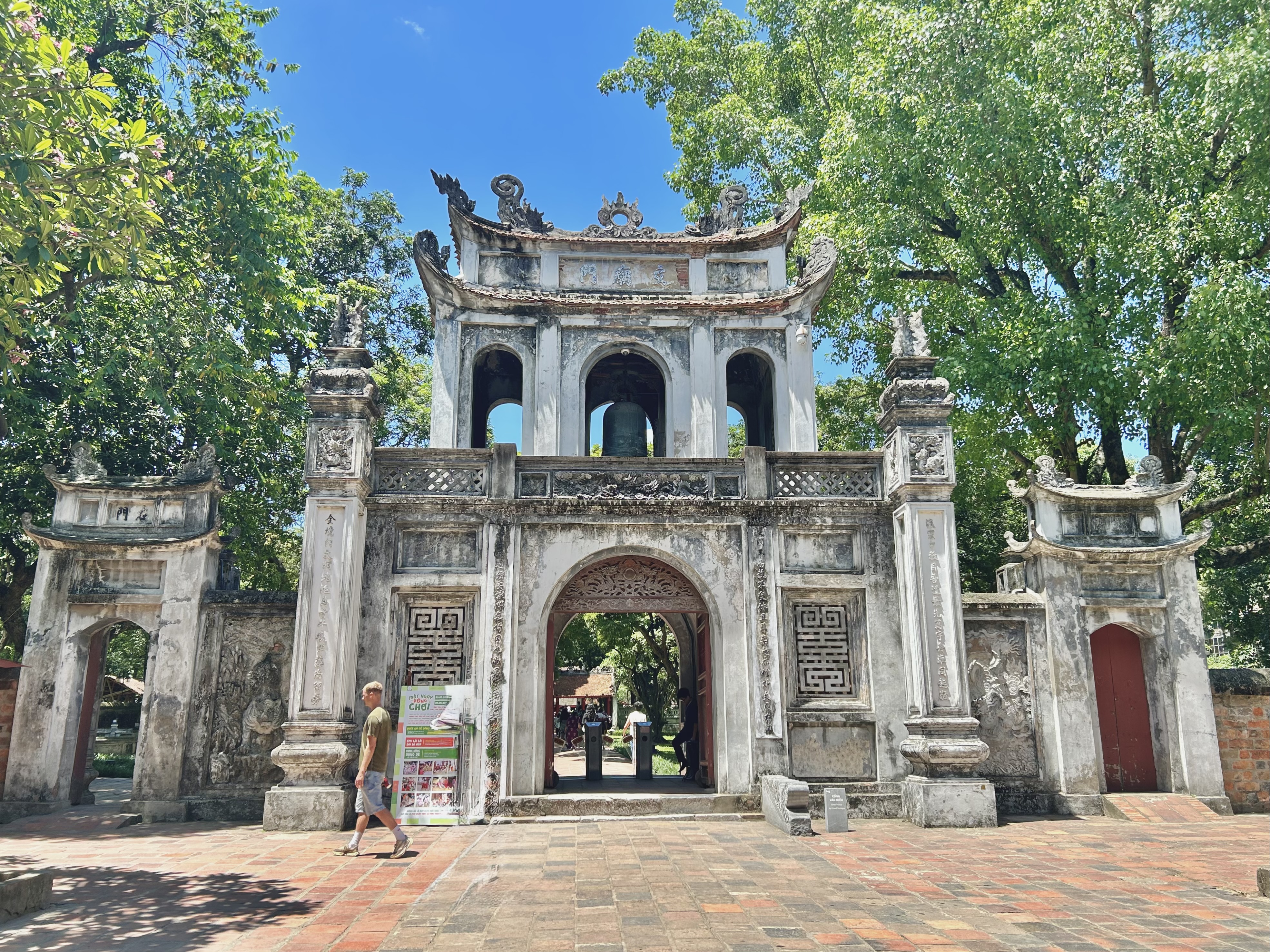
It is distinguished by a bronze bell on the upper tier, symbolic reliefs, and three doorways–– a large door at the centre, flanked by two smaller gates.


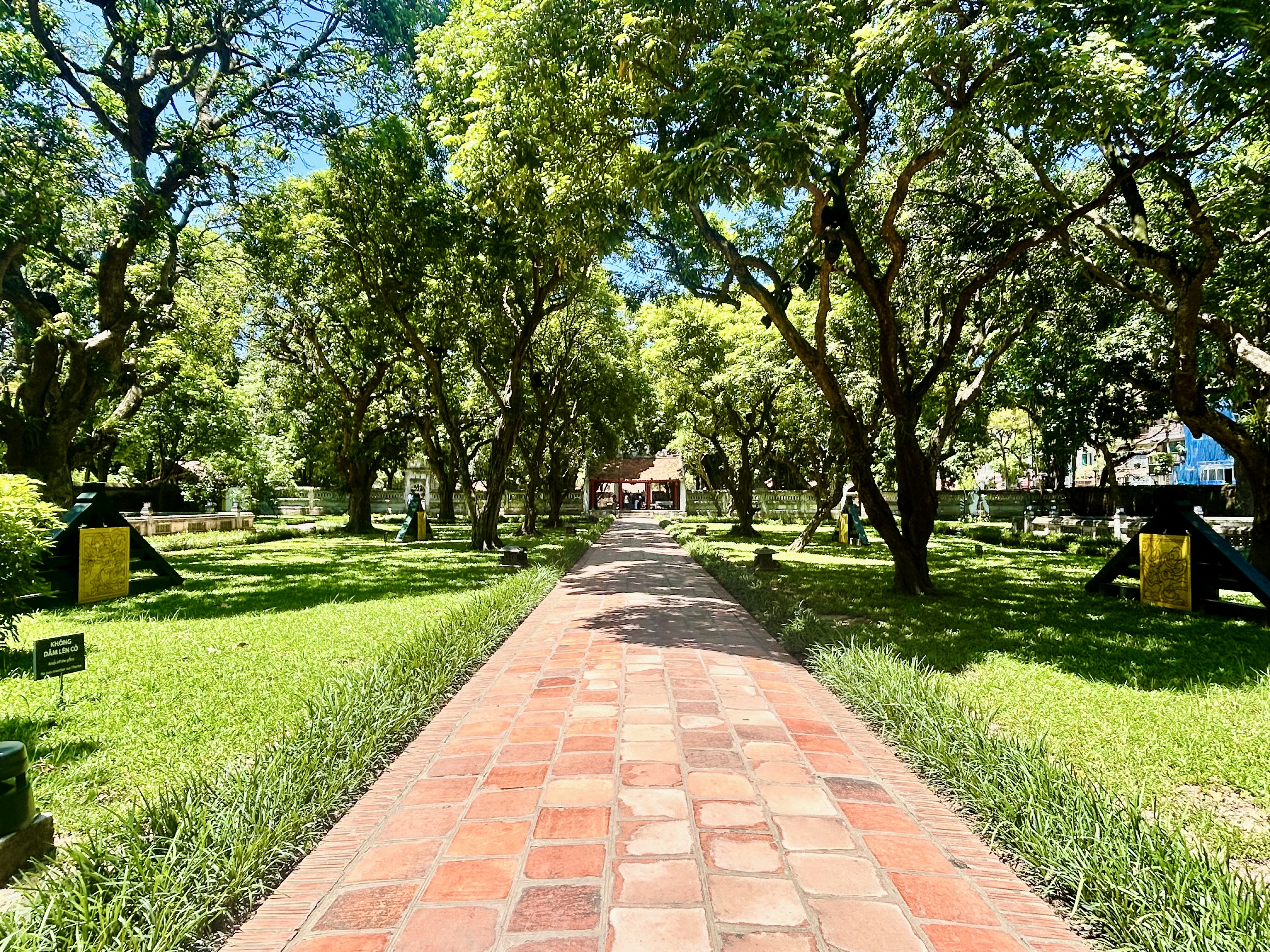
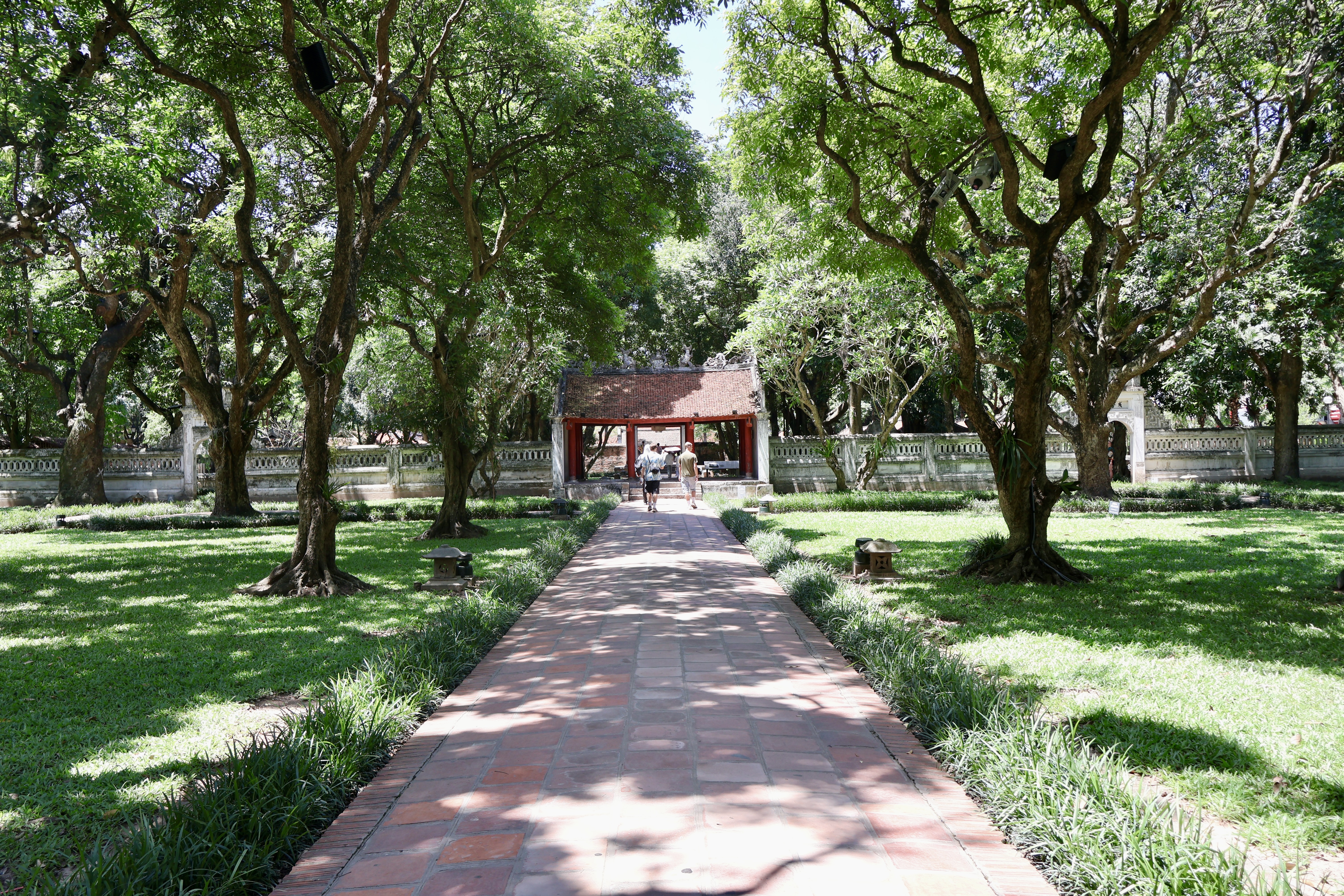
We visited Hanoi in May, when it, like much of mainland Southeast Asia, is typically cloaked in sweltering heat and oppressive humidity. In the thick of the city’s commotion, the Temple of Literature felt like an oasis. The moment we stepped into the complex, a cool breeze swept through the dense canopy, as though the old trees had been expecting our arrival, offering a welcome respite from the hot weather. The verdant green grass and the tranquil pond at the heart of the courtyard lent the space an air of serenity. At the entrance, I picked up a pamphlet that outlined a brief history of Văn Miếu–Quốc Tử Giám.
The Temple of Literature is a heritage complex comprising five successive courtyards, each unfolding as you move from one to the next. The first courtyard, known as Nhập Đạo (Entrance to the Way), begins as you step through the Great Portico (Văn Miếu Môn), the temple’s outer main entrance, flanked by two smaller doorways. The courtyard features two ponds and a well-manicured garden symmetrically arranged in alignment with the cosmic order.
The pathway from the Great Portico leads to the three gates that mark the ceremonial passage into the second courtyard. At the center of the trio stands the Great Middle Gate (Đại Trung Môn), with Thành Đức Môn (Gate of Accomplished Virtue) on the left and Đạt Tài Môn (Gate of Attained Talent) on the right.
It was remarkable to see how Confucian philosophy—with its emphasis on ethics, moral virtue, and scholarly excellence—has been woven into the architecture itself. For a while, I stood there to admire the upturned eaves, dragon-scaled roof tiles, timber structure, and red lacquered columns. The ornate roof ridge, crowned with two carp flanking a vase, couldn’t escape my attention either. It appeared as if every architectural detail had been carefully pieced together to bring a sense of balance, proportion, and restraint—the very ideals that lie at the heart of Confucian principles.

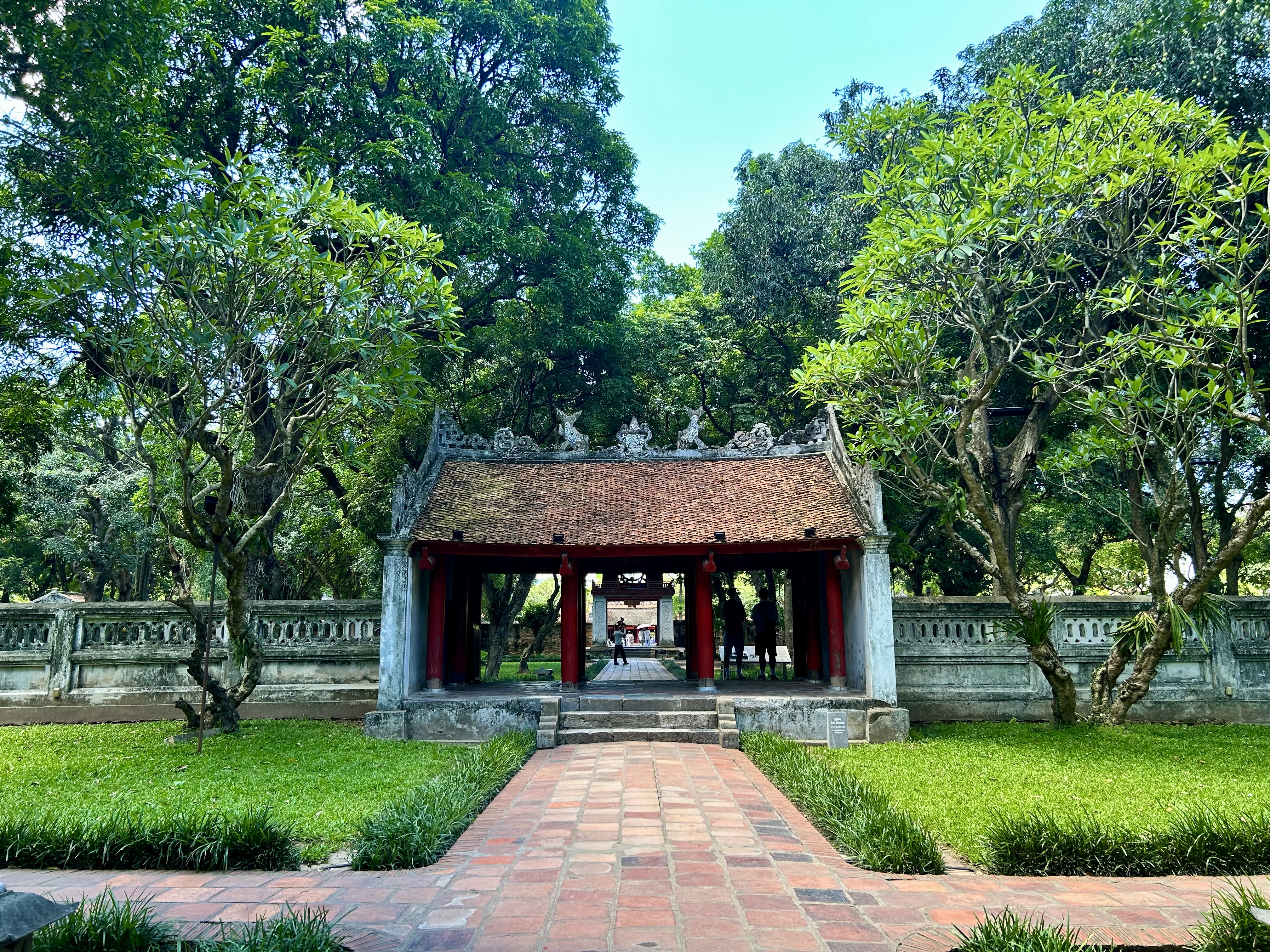
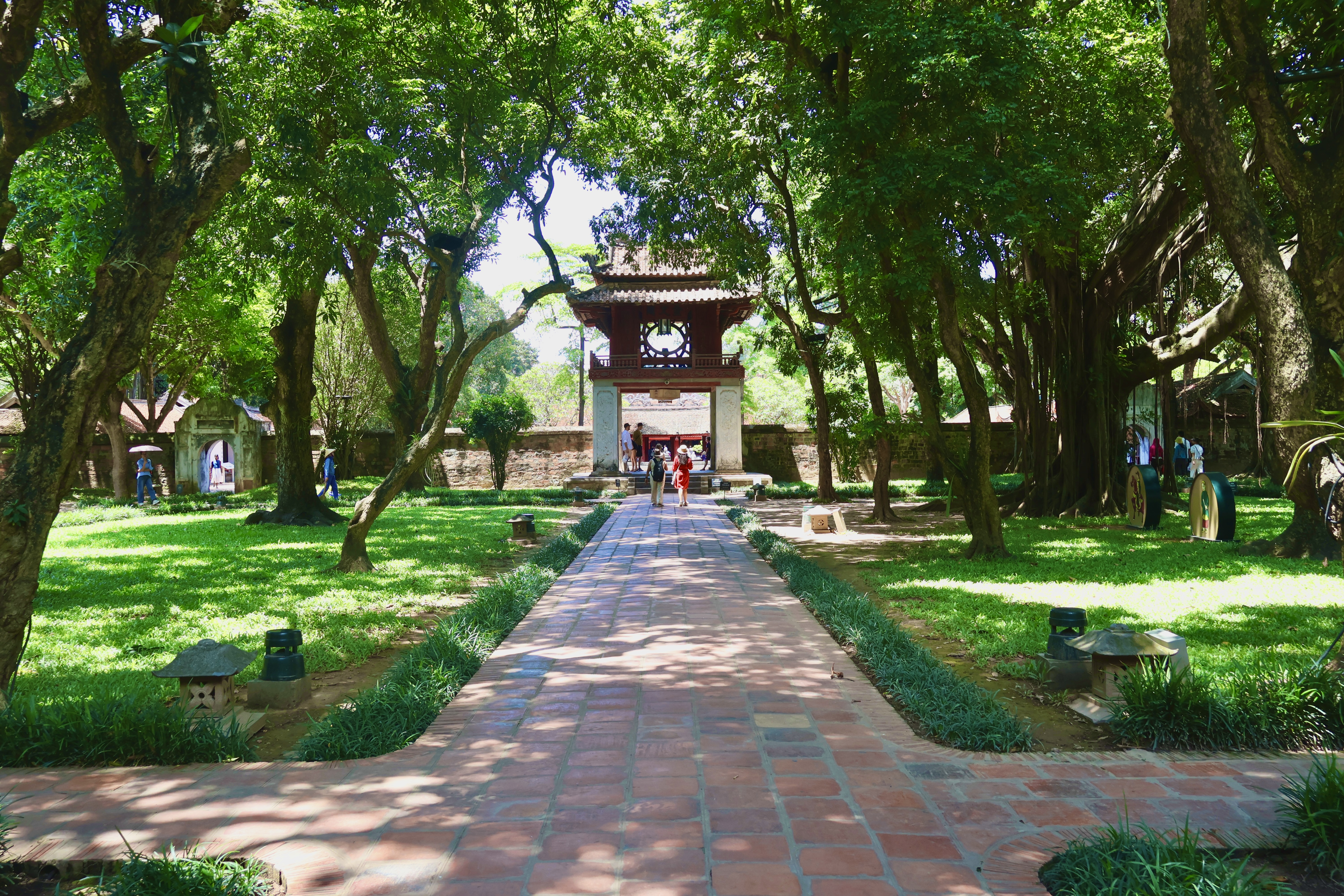
Among the many architectural features within the complex, the Khuê Văn Các (Pavilion of the Constellation of Literature) captivated me the most. Adopted as Hanoi’s emblem, it is one of the city’s most recognizable cultural symbols. Beyond its appearance on official signage, public buildings, road signs, tourist maps, and souvenirs, its graceful silhouette had quietly accompanied us throughout our stay in Vietnam—in the most unassuming of places—on 100,000 VND (Vietnamese dong).
Once again, I could see that the perfect symmetry of the building reflected an ideal of harmony, with each architectural element—the square plinth, brick columns, wooden balustrades, and circular windows resembling a radiating sun—expressing the balance between heaven and earth.
Khuê Văn Các serves as the passage between the second and third courtyards. The absence of doors in the pavilion suggests a seamless progression from one stage to the next, symbolizing a journey towards enlightenment that continues without boundaries or constraint.
To observe a grandeur like this in detail demands your time and attention. And it wasn’t easy, especially at midday, when the relentless heat sapped our energy. But I didn’t let it dampen my enthusiasm. There was simply too much to discover, appreciate and take in.
Come to think of it, isn’t it fascinating that the paths, gardens, temples, and buildings we explore today have witnessed nearly a thousand years of history?


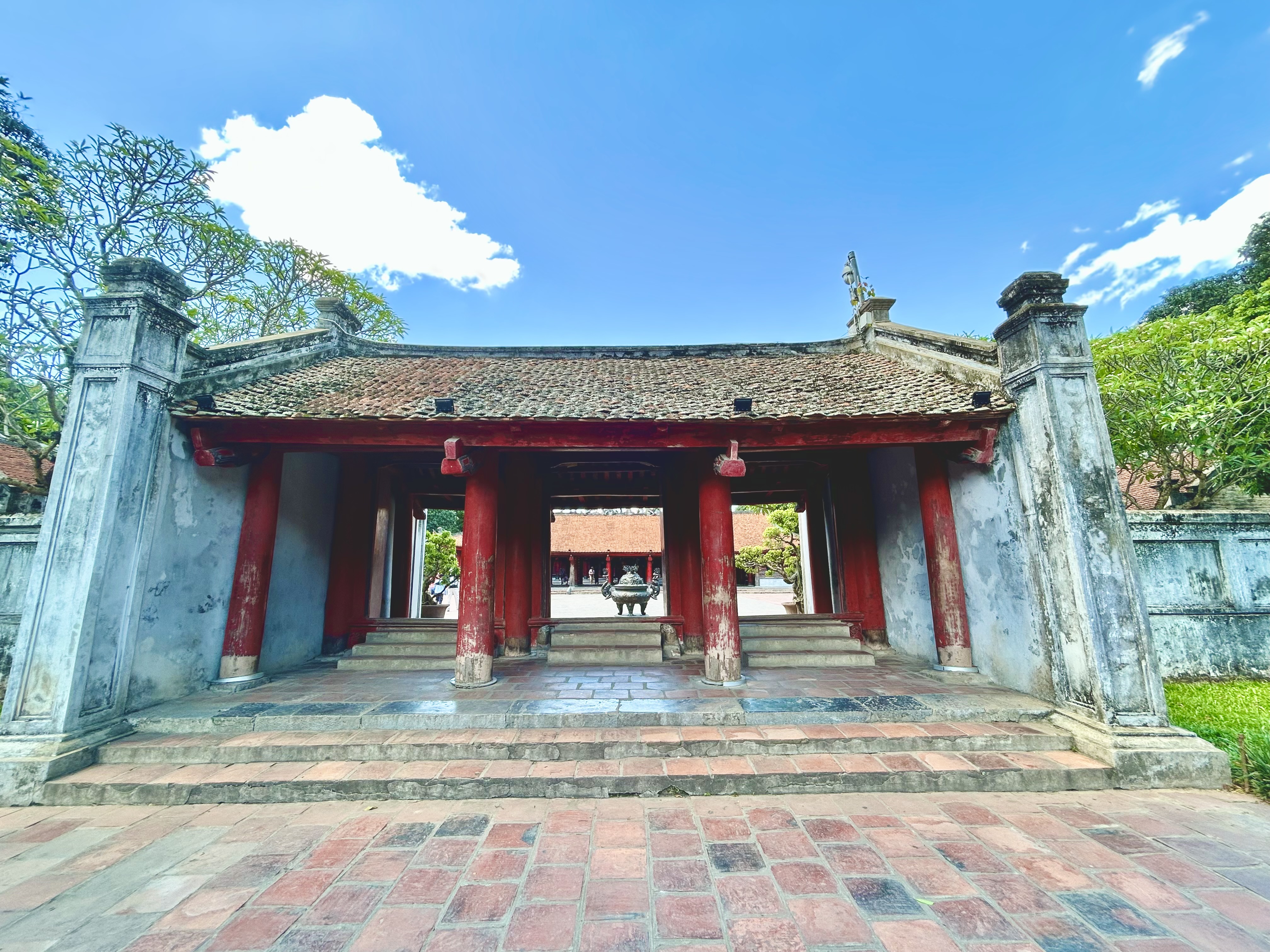

A closer view of Đại Thành Gate (Great Success Gate), with the Bái Đường (Hall of Ceremony) visible through its central opening. Behind it lies the Đại Thành Sanctuary, dedicated to Confucius and his disciples.
As a traveler, perhaps it is this sense of time that draws me to old monuments and ancient ruins. Places like the Temple of Literature are treasure troves of architectural wonders. They are living remnants of a distant past. Their complex histories serve as a constant reminder that the stories they hold have not simply faded into antiquity but have endured through the passage of centuries and been immortalized as cultural legacies.
How masterfully the complex has been conceived, with each element carrying profound significance—the materials, carvings, structure, and, most importantly, the philosophy and sacred interplay that bring it all together. A sense of equilibrium runs through the entire design of the Temple of Literature. The relationship between heaven and earth lies at its very heart.
You see it in the way the paths have been laid out. You find it in the way Feng Shui guides the arrangement of the complex, seeking to create the highest degree of cosmic harmony and bring the Five Elements into balance. You discover symmetry and symbolism in every detail. The landscaping, the positioning, and everything in between are part of a design philosophy that dates back many centuries.
Perhaps it is only by witnessing it for yourself that you begin to truly understand it.
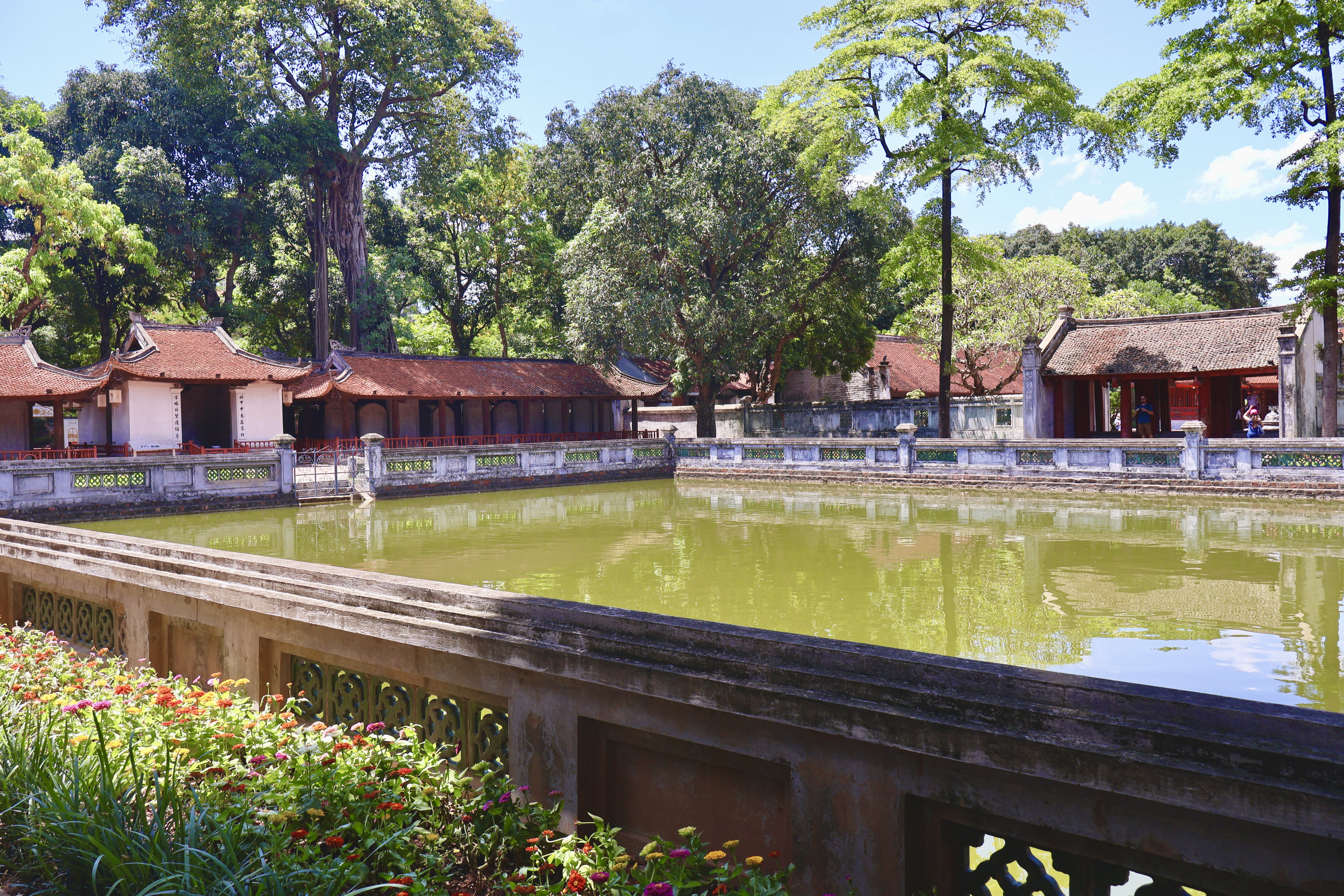
By now, having moved past Khuê Văn Các, we arrived in the third courtyard, where an ancient square pool, called Thiên Quang, or “Well of Heavenly Brilliance,” lies. Once I was there, my attention was instinctively drawn to the stone stelae—remarkable historical records that preserve the names and achievements of generations of scholars. Created to honor talent, encourage education and the pursuit of learning, the 82 doctoral stelae remain, resting on the backs of carved stone turtles.
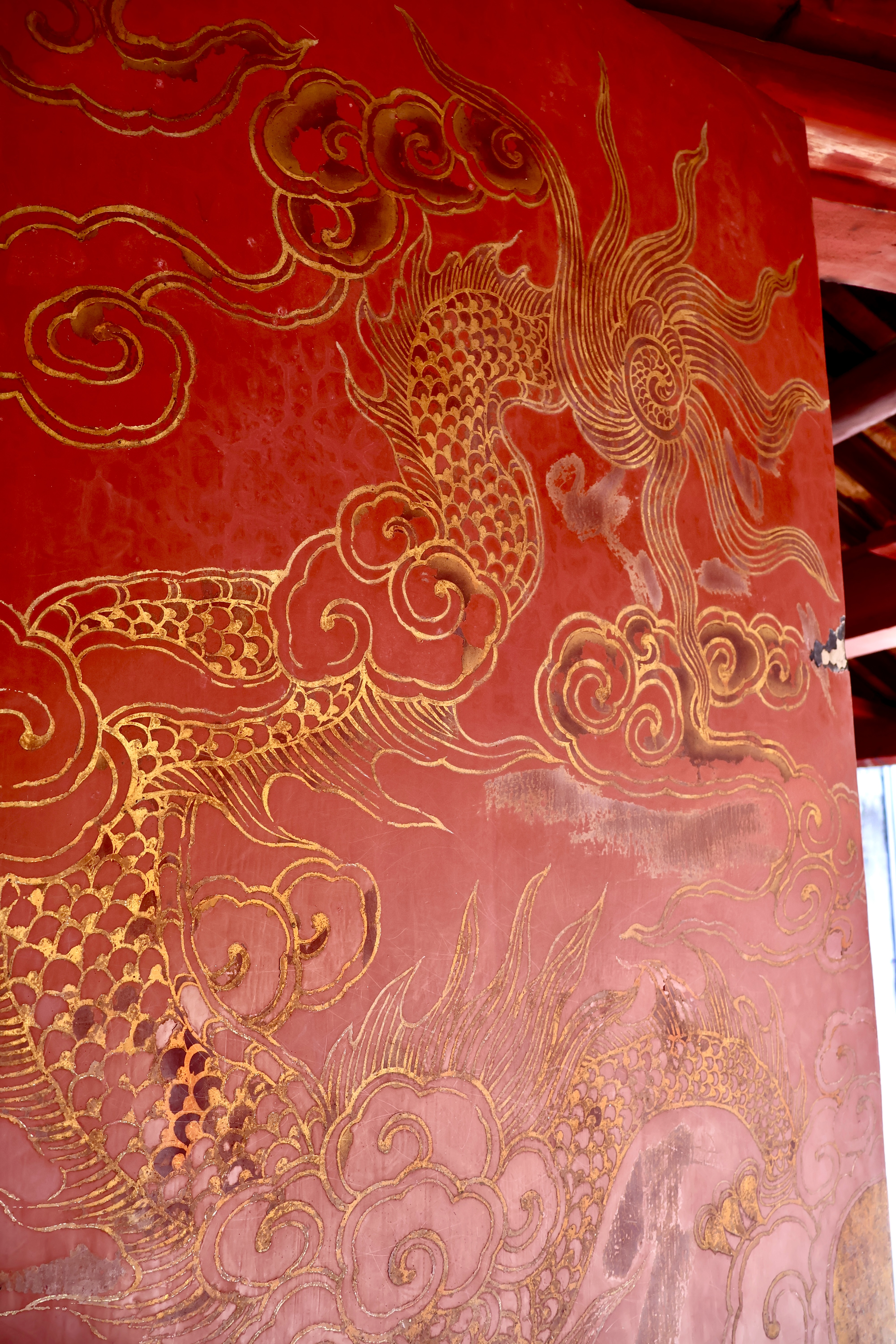
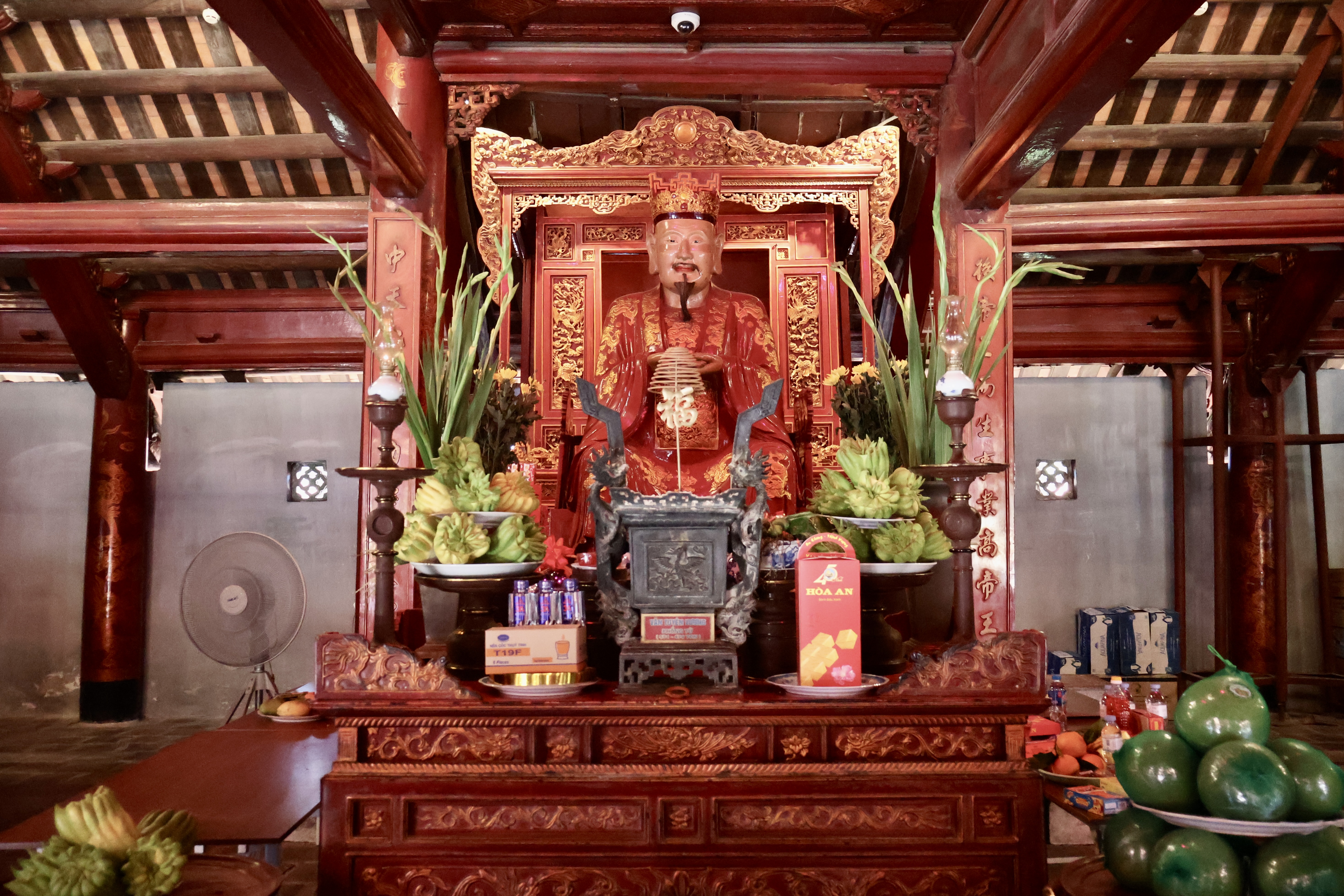
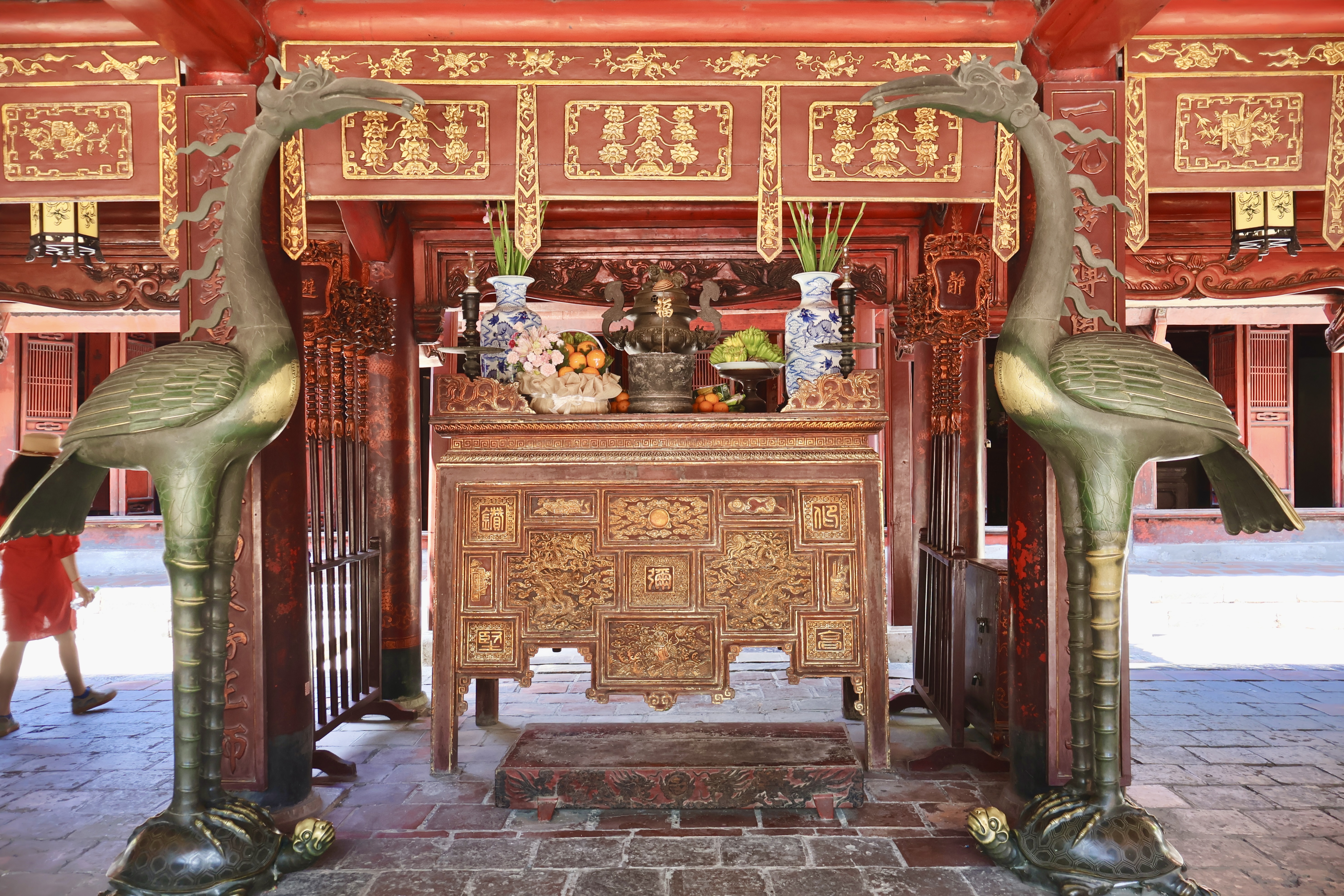
Not long after, I entered the fourth courtyard, where the striking Confucius altar, lacquered in vermilion and accented with gold, came into view. Flowers, fruits, bottles of energy drinks, incense, and candles were arranged before the shrine, adding color and life to the ceremonial space.
As I walked, I suddenly felt a surge of happiness and gratitude in equal measure. I felt fortunate that we could experience a slice of a country’s history quite different from our own. I felt blessed that we could stand before their gods and offer our prayers with the same reverence. In moments like these, when life feels utterly beautiful, I simply let myself immerse in it and take it all in.
We were nearing the end of our tour and, with it, the final leg of our Vietnam trip. I must admit it was a bittersweet moment for me. Exploring Hanoi was a pure joy. From walks around Hoan Kiem Lake and meandering through the streets of the Old Quarter to visits to its beautiful pagodas and places of worship, the sheer energy of the city—its culture, history, art and spirituality—moved me.
And I know that when a place has touched you deeply, nostalgia somehow finds its way back to you.

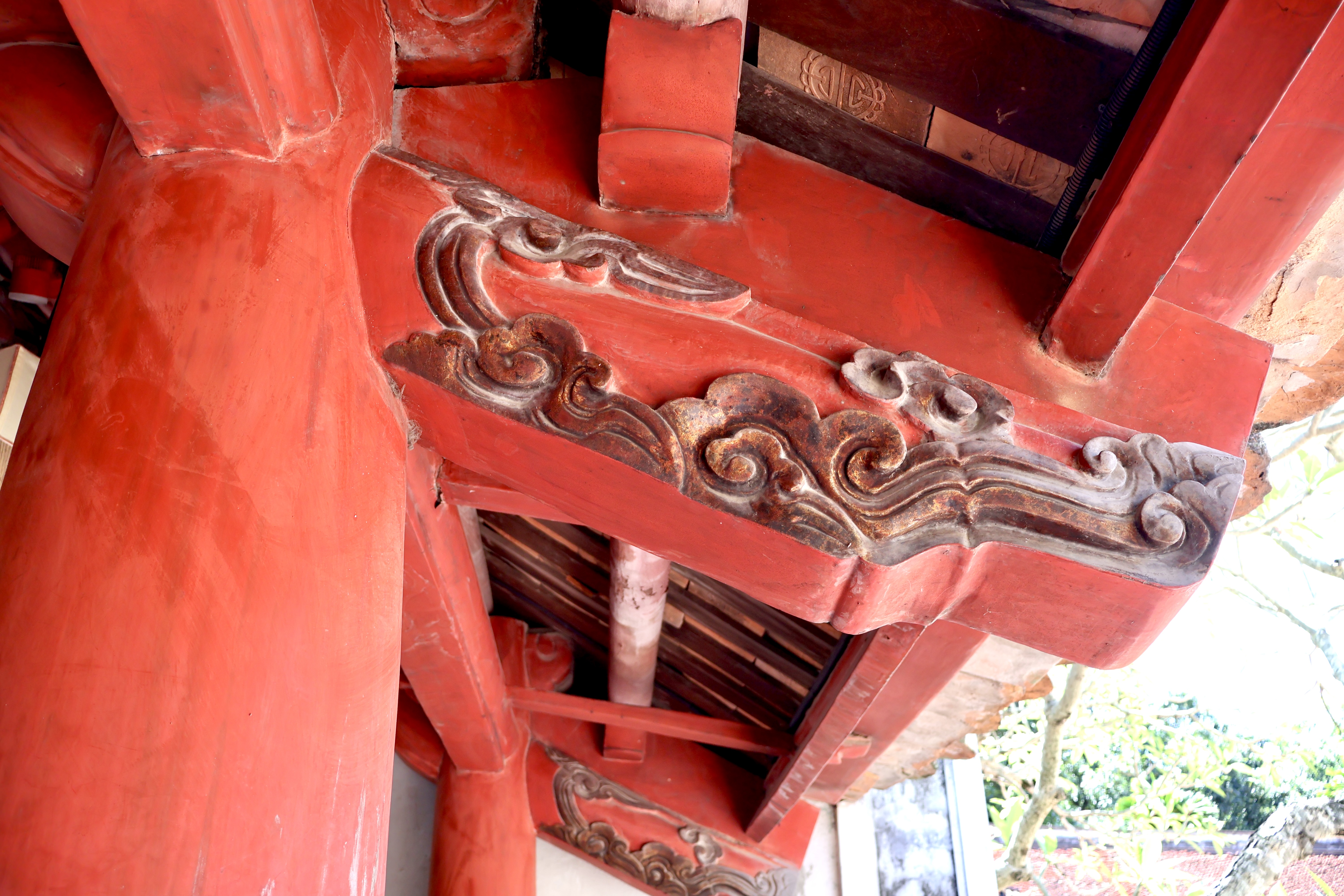

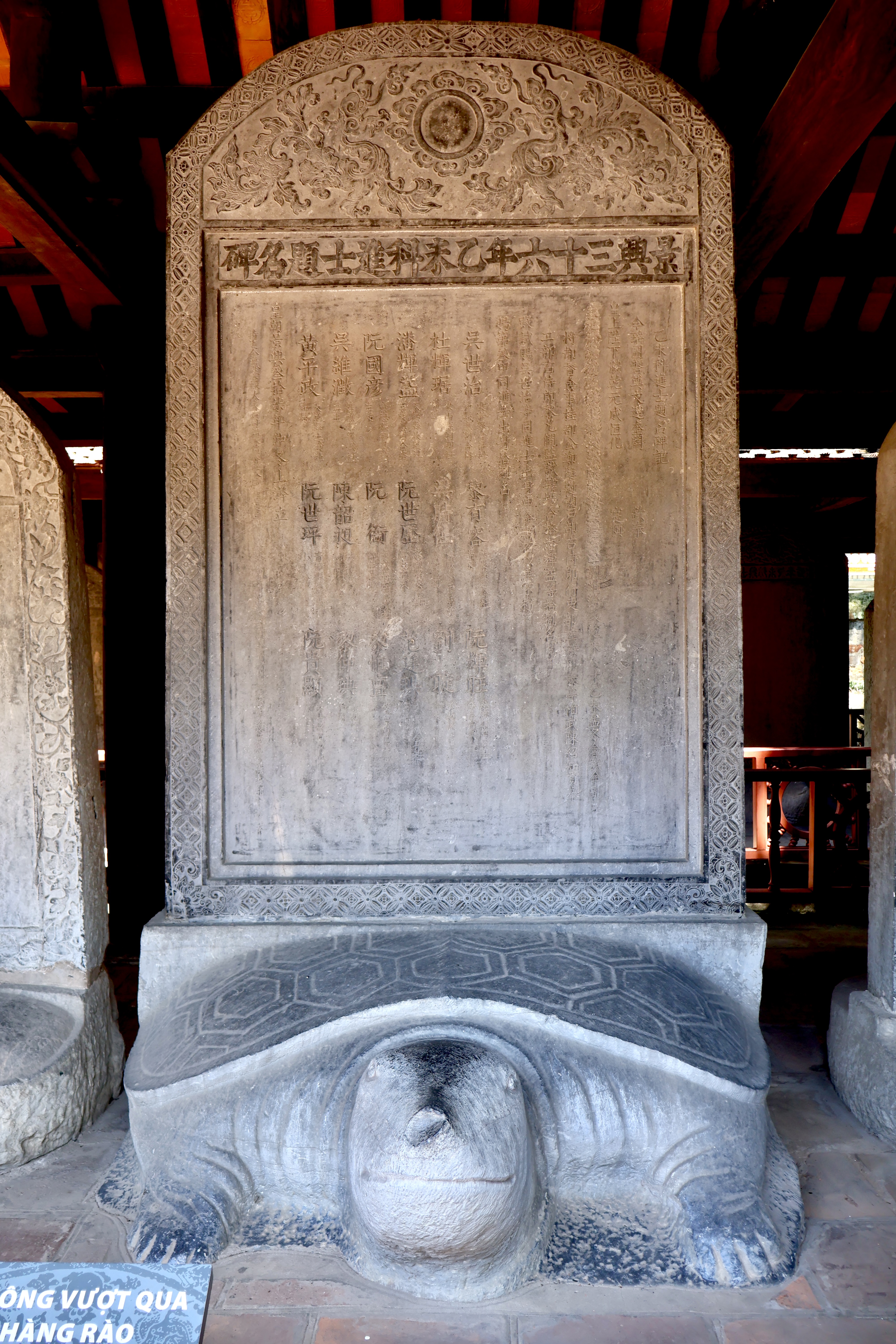

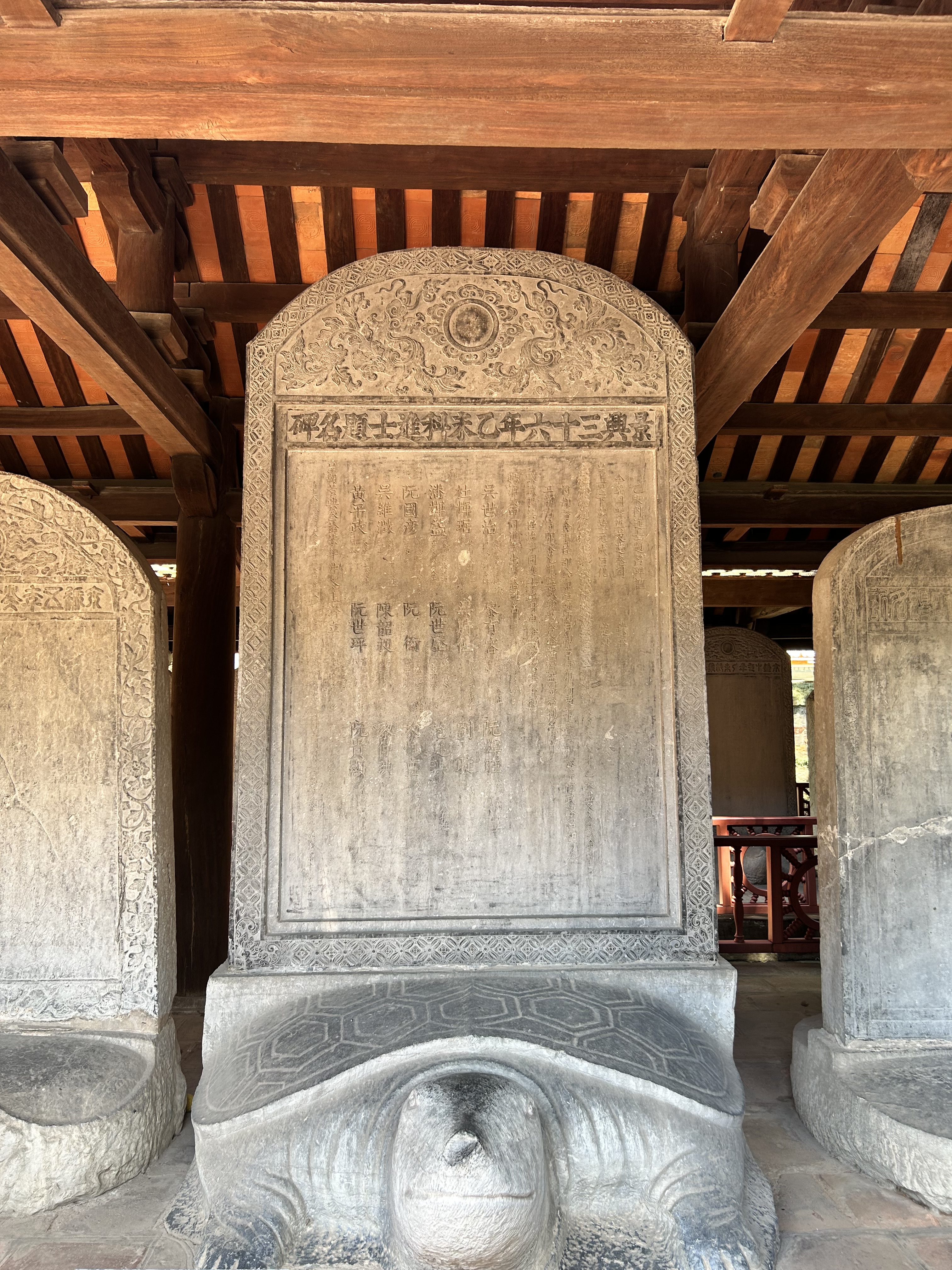
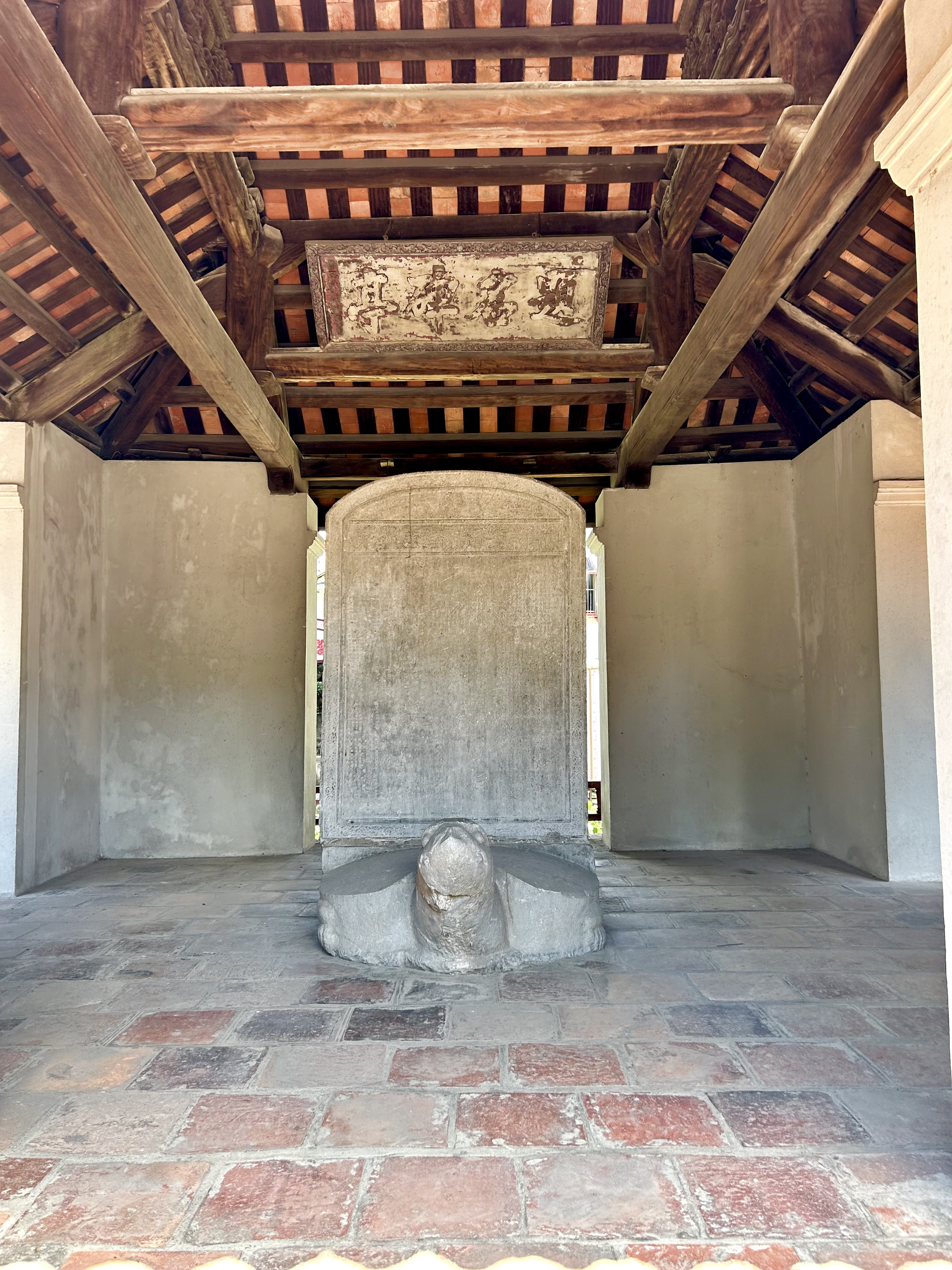
bearing the weight of centuries.
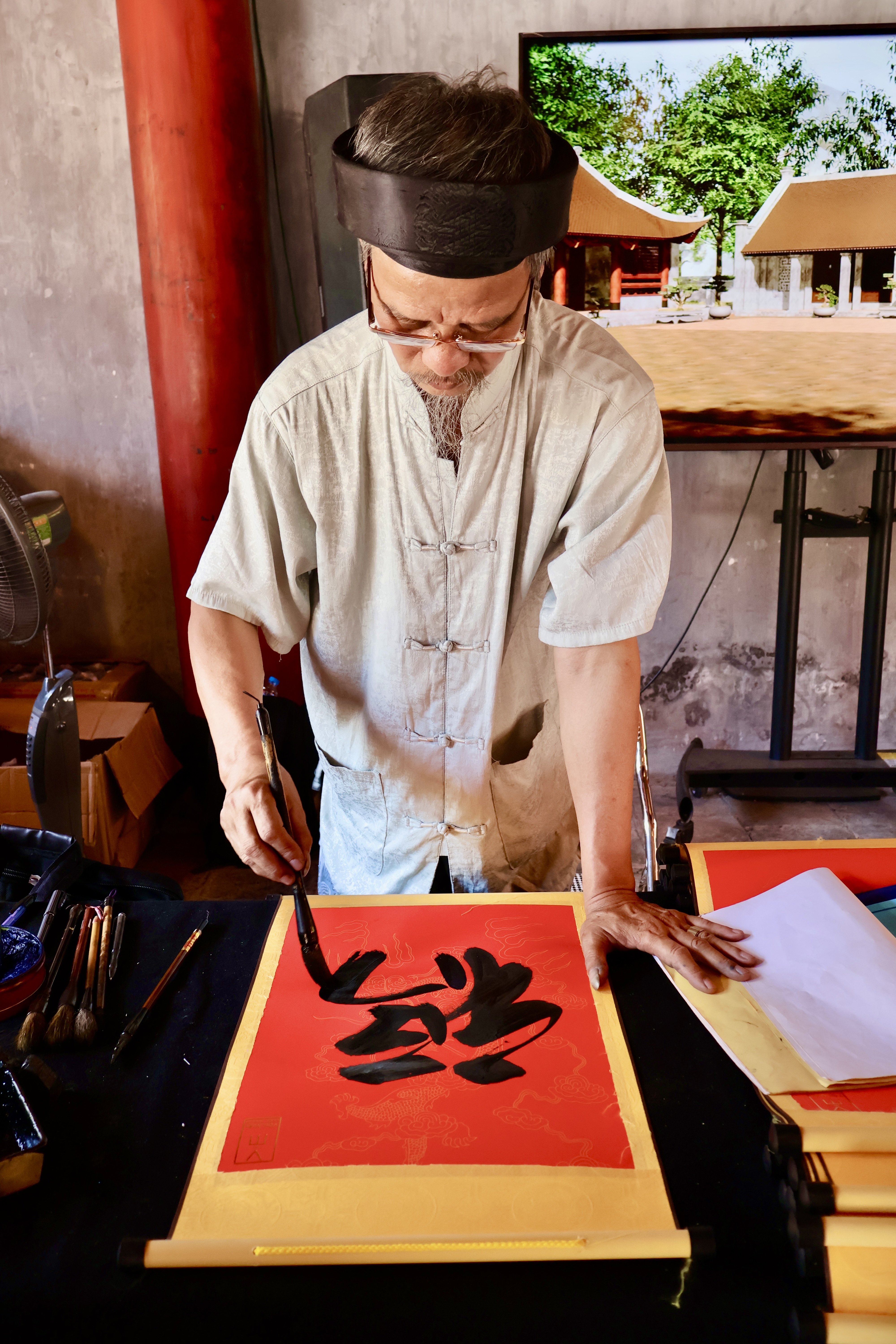
In a quiet corner near the altar, a calligrapher sat with his brushes, paper scrolls, and a booklet of characters written in traditional Han Chinese/Vietnamese Nom script. Each character carried its own meaning—health, wealth, longevity, peace, success, to name a few. Visitors watched him guide his brush across the paper, inscribing the characters they had requested. With a few deft strokes, he brought each chosen word to life on a scroll and placed it in the hands of its new bearer.
I watched this for a while and couldn’t resist any longer. I had to have one.
There was something about this strange, elegant script, gliding so gracefully across the scroll, that captivated me. It seemed like the perfect souvenir, not merely something to take home, but a little piece of the experience itself.
When it was my turn to choose, one word seemed to capture that moment in my life better than any other.
Happiness.
I chose the word Happiness.
Discover more from
Subscribe to get the latest posts sent to your email.

